
Is the certificate right, or just right for you?
A real TLS handshake against any public site: the issuer, the expiry and the days left, whether the chain is complete as served, whether the name matches, which TLS versions the server will agree to, HSTS, and whether plain HTTP redirects. Free, 10 checks a day, no sign-up.
10 free checks a day. Answers are cached for 6 hours per site, so asking twice costs nobody anything.
“It works in my browser” is not a certificate check. A server is supposed to serve its certificate together with the intermediate above it. If it serves only its own, your browser can still succeed — it cached that intermediate from some other site weeks ago — while a customer’s phone, which never has, sees a security warning and leaves. That is why this tool opens the connection and reads the chain as served rather than asking whether a certificate exists.
Straight answers.
What does this actually do?
Opens a real TLS connection to your site and reads the certificate the server presents, the chain it serves with it, and which TLS versions it will agree to. It is not a lookup in somebody's database: it is the handshake, which is why it can tell you about a chain that works in your browser and fails on a phone.
What is an incomplete chain, and why does it work for me?
A server should send its certificate and the intermediate certificate above it. If it only sends its own, your browser may still succeed — because it cached that intermediate from another site — while a phone that has never seen it fails. This is one of the most common real causes of “it works for me”, and it is invisible until somebody checks the chain as served.
How many days before expiry should I worry?
Thirty is the usual alarm and fourteen is late. Automated renewal (Let's Encrypt and most platforms) renews around thirty days out, so a certificate inside two weeks usually means the renewal is failing rather than that nobody has got around to it. Shopify and most hosts handle this for you; a custom domain in front of a custom server is where it goes wrong.
What is HSTS and do I need it?
A header that tells browsers to refuse plain HTTP for your domain for a stated period. It closes the gap where a visitor's first request goes out unencrypted and can be intercepted. Worth having, with one caution: a long max-age is hard to undo, so start short.
Is TLS 1.0 or 1.1 a problem?
Yes, and not because anybody uses them: the browsers dropped them in 2020 and PCI DSS does not accept them. If your server still offers them, there is nothing to gain and a line in an audit to lose. Turning them off is a configuration change, not a migration.
Does this check my certificate every day?
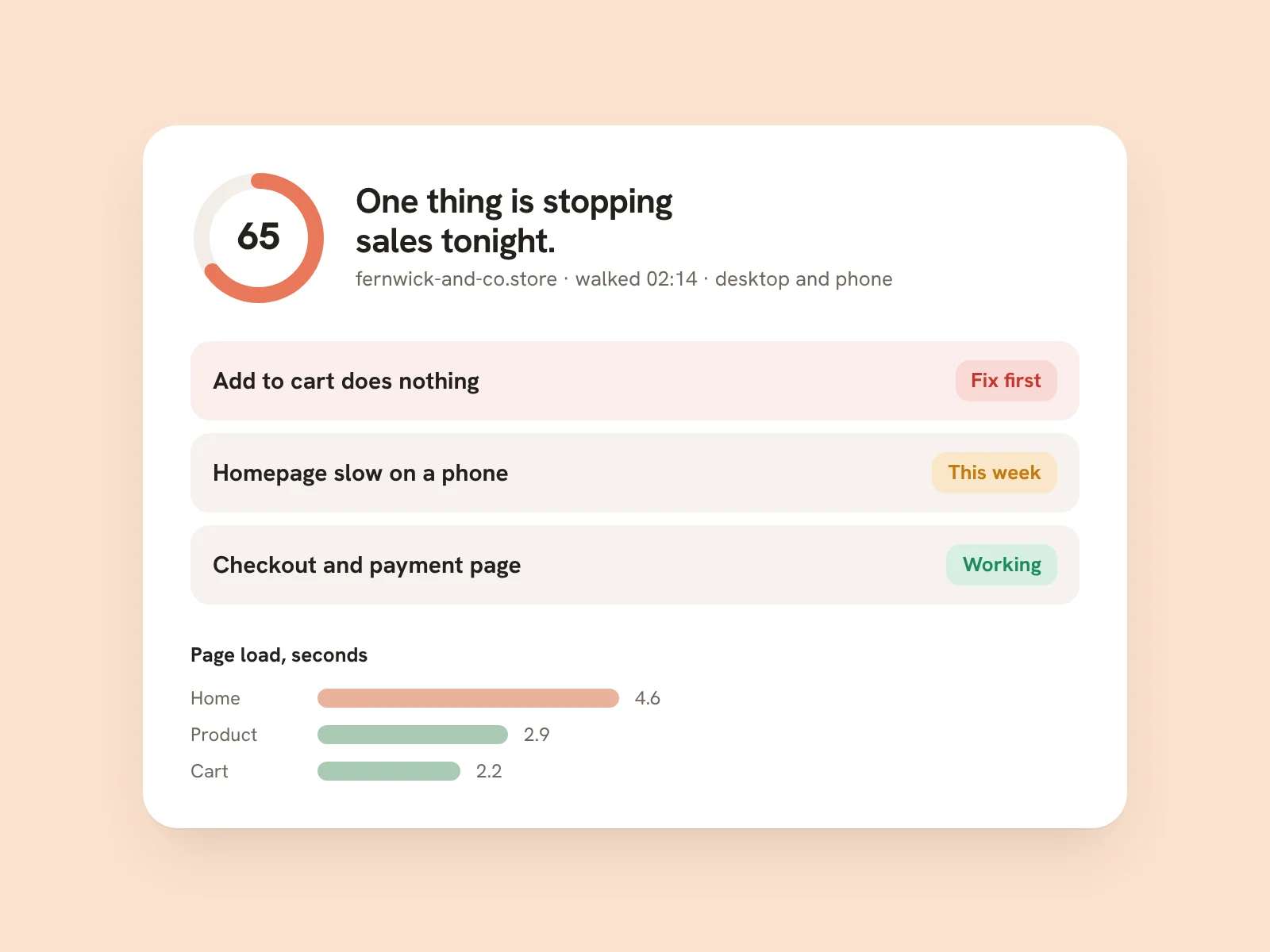
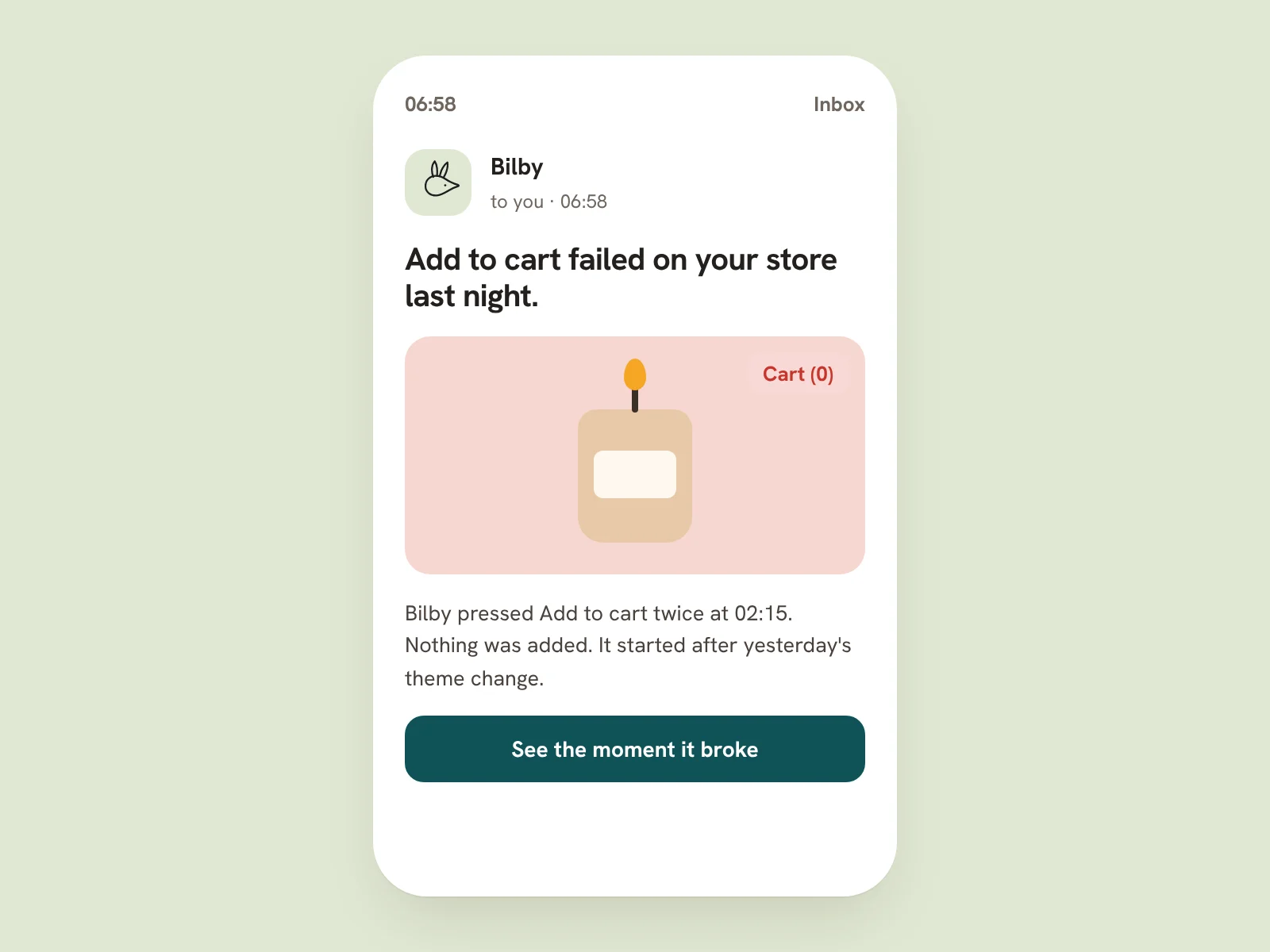
No — it checks it now, and a certificate expires on a date nobody has in their calendar. That is what Bilby does: it looks at the certificate, the domain's expiry and the whole buying path every night, and emails you before the date rather than after.
Watch this every night with Bilby.
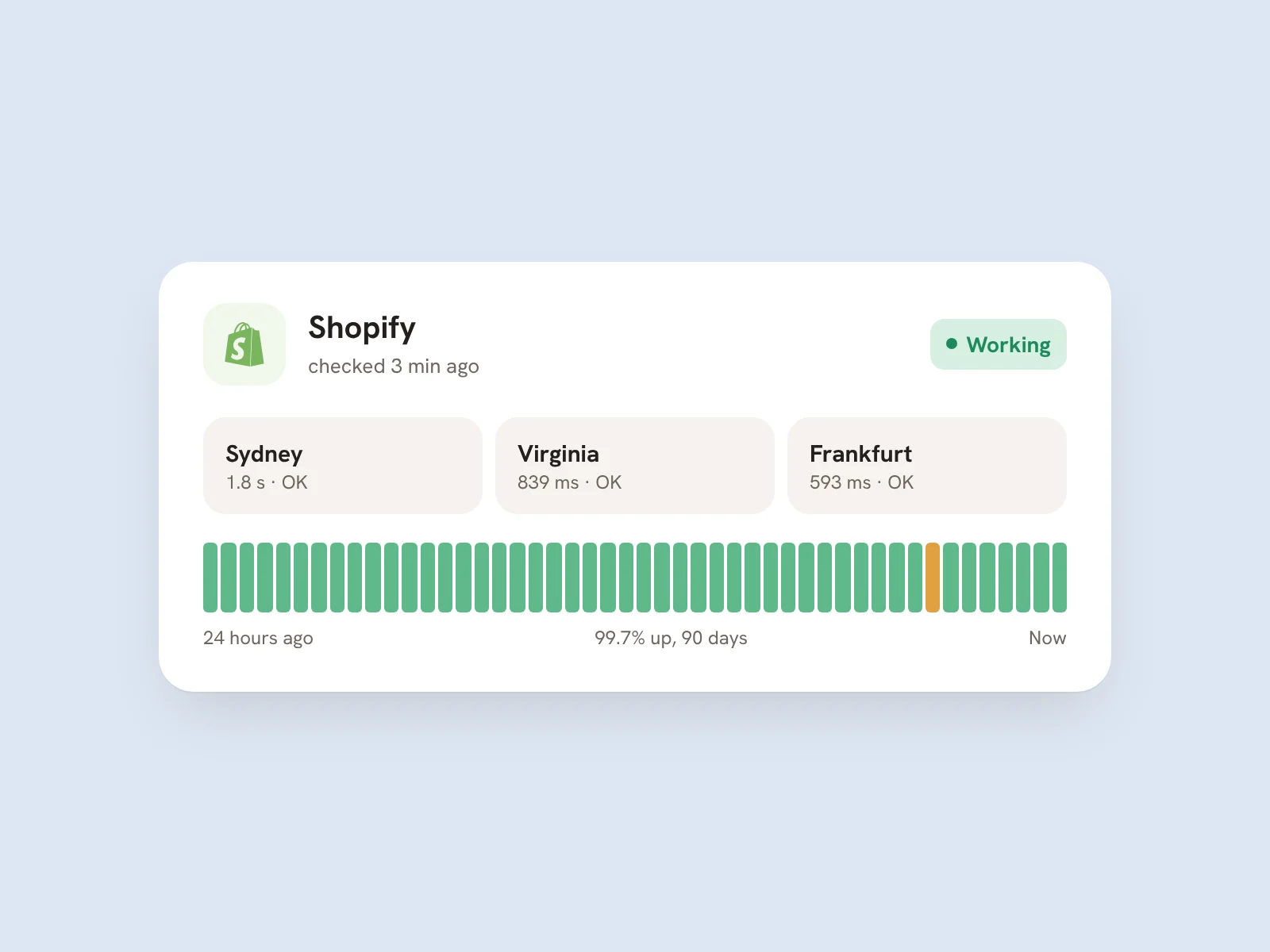
This is one measurement, today, by you. Bilby checks the certificate, the domain’s expiry and the whole buying path every night from six regions, and emails you when something changes — before a customer finds it.
Where to go from here
What this looks like in the app
Start tonight.
Type your store. Bilby walks it now and shows you what it found. Free, no card.